
Week 12: Advanced Analytics — “Turn raw logs into decisions”
What we’re building today
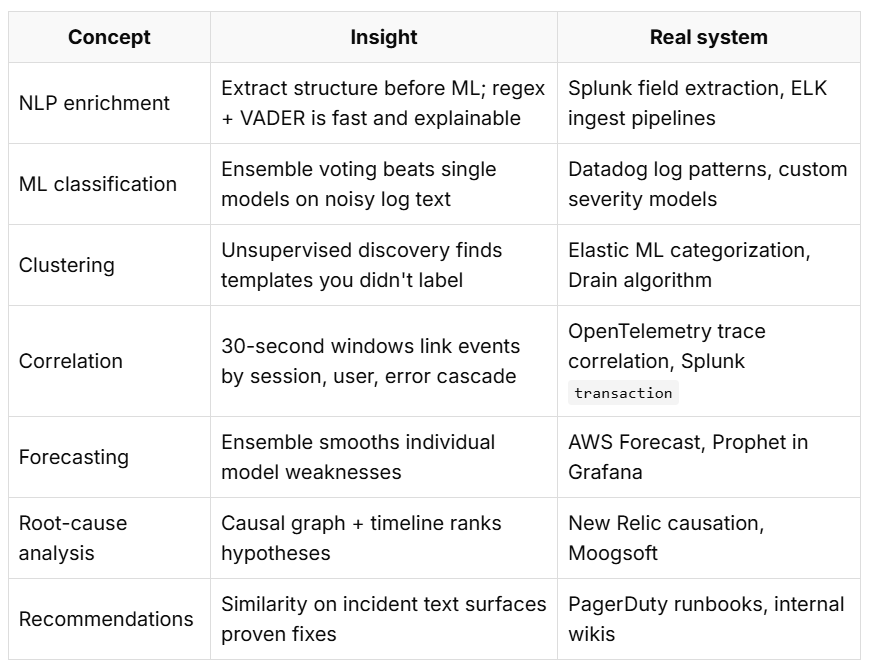
When Datadog surfaces an outage, engineers don’t read millions of lines—they rely on classification, clustering, correlation, forecasting, root-cause graphs, and fix recommendations working as one pipeline. Splunk’s ML Toolkit and Elastic’s Observability AI follow the same pattern: enrich first, then reason across signals. This lesson wires seven analytics layers into one platform.
By the end you’ll have:
NLP enrichment extracting intent, entities, and sentiment from free-text logs
ML classification predicting severity and category
Clustering discovering patterns and flagging anomalies
Cross-source correlation linking related events
Ensemble forecasting with alert levels on response-time metrics
Root-cause analysis with causal graphs on incidents
Troubleshooting recommendations from similar past incidents
This project integrates analytics patterns from prior lessons without modifying those source directories.
Why this matters
PagerDuty AIOps groups related alerts before paging—your correlation engine does this at log-ingest scale.
Google Borgmon / Monarch forecast capacity from time-series—your ensemble forecaster mirrors that on
response_time.Elastic ML clusters rare log templates—your KMeans + DBSCAN pipeline surfaces the same anomaly signals.
New Relic incident intelligence ranks probable root causes—your RCA engine uses causal ordering and confidence scoring.
GitHub Copilot for SRE suggests fixes from similar tickets—your recommendation engine uses TF-IDF similarity, not black-box magic.
Analytics is not one model—it is a staged pipeline where each layer adds context the next layer needs.
Core concepts
Architecture
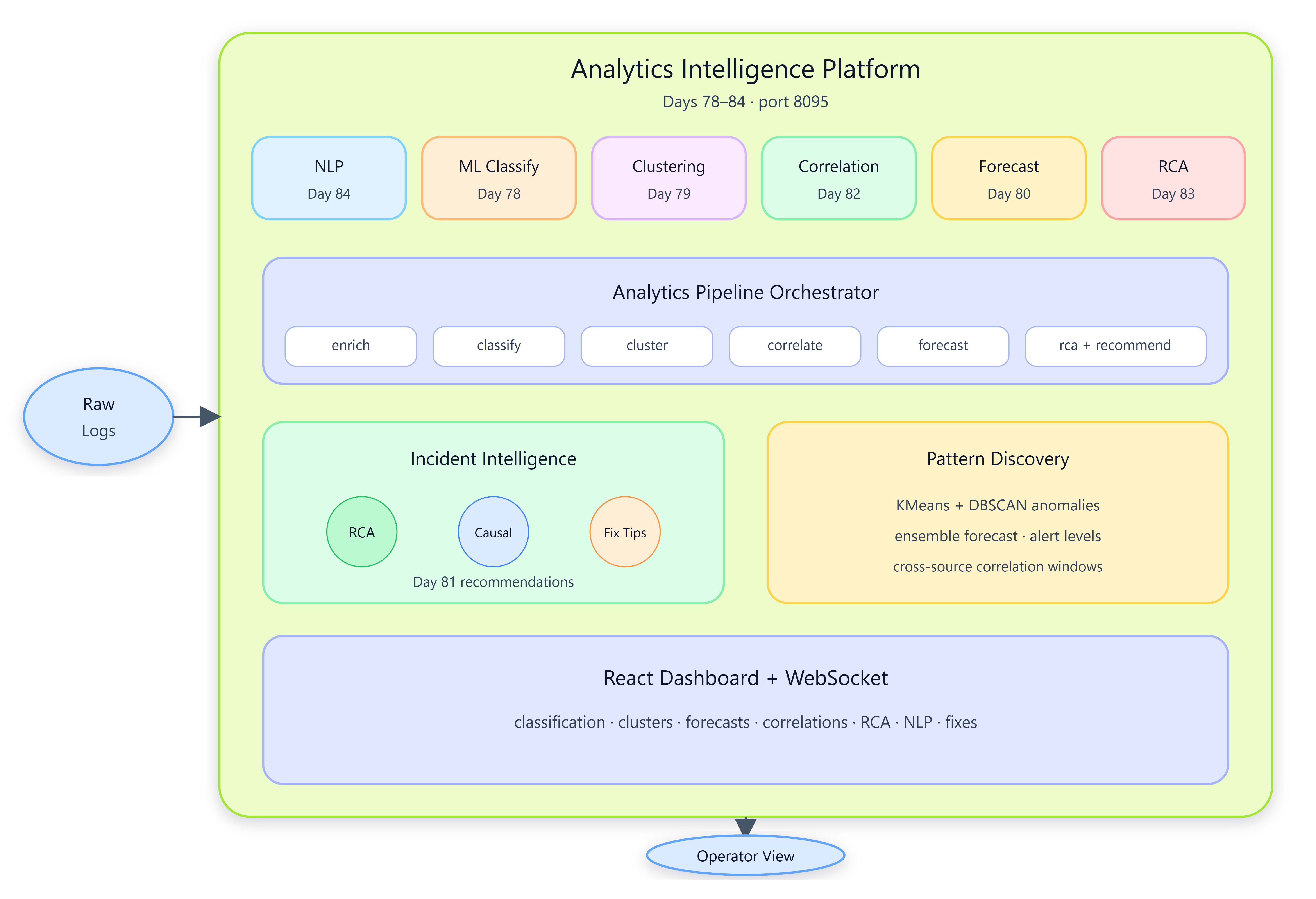
Single FastAPI service on port 8095. All analytics modules run in-process—same coordination logic as a distributed production stack without extra containers for learning.
Preparing for a distributed systems interview?
→Download the free Interview Pack
→ Subscribe now to access source code repository - 200 + coding lessons
