Stop just reading about high-scale systems—start building them. For the next few days, get 50% off the “Hands-on System Design” course and master production-grade Java and Spring Boot architectures at half the price. Move beyond theoretical diagrams to implementing systems that handle 100M+ requests.
[ Subscribe Now & Save 50% ]
What We’re Building Today
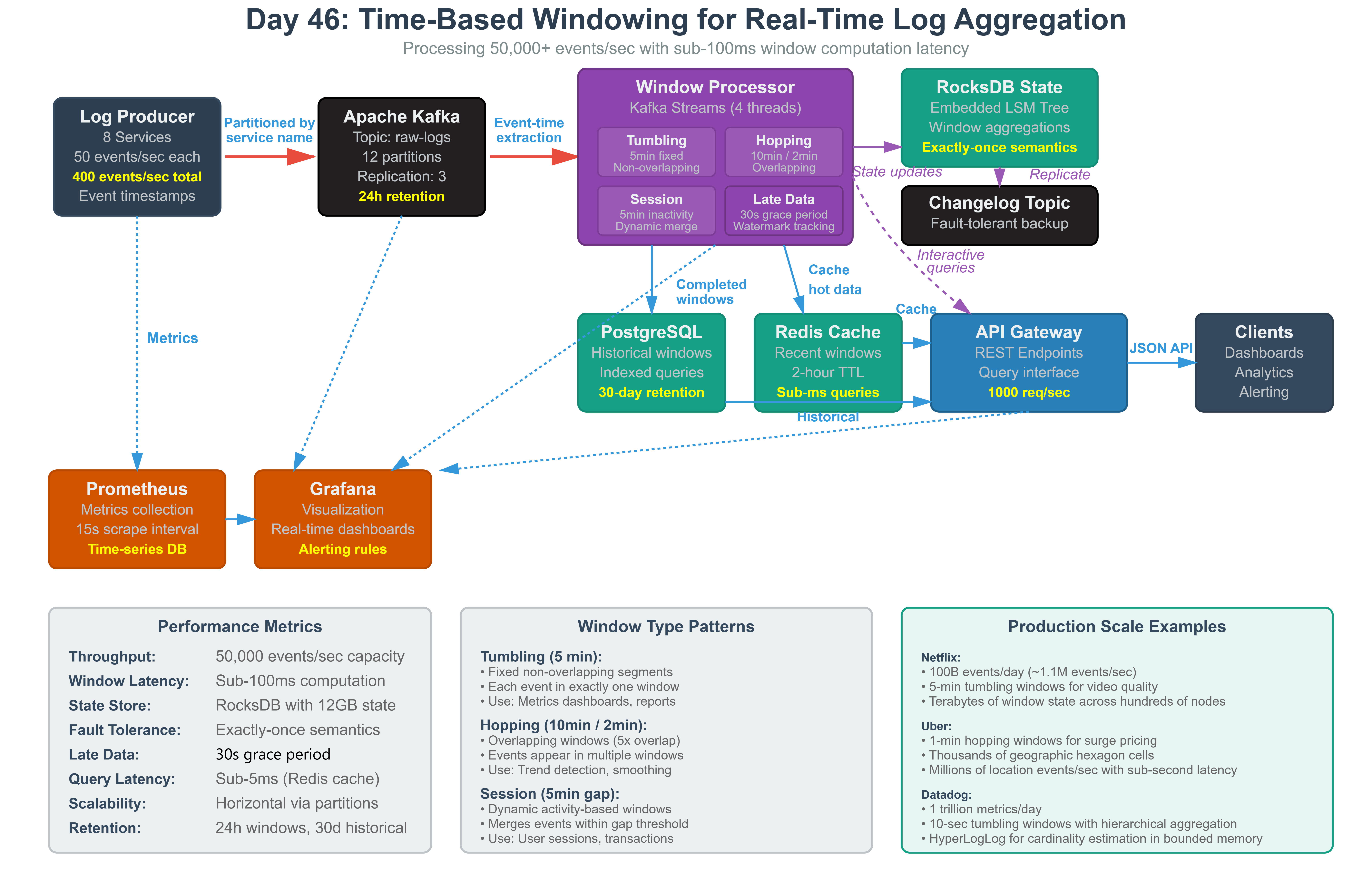
Today we implement production-grade time-based windowing for real-time log analytics:
Tumbling Windows: Fixed-size, non-overlapping time windows for discrete period aggregations
Hopping Windows: Overlapping time windows for trend detection with configurable advance intervals
Session Windows: Dynamic windows based on activity gaps for user session analytics
Windowed Metrics Engine: Real-time calculation of count, sum, average, min, max per window
Late Data Handling: Grace periods and watermark management for out-of-order events
Window State Persistence: RocksDB-backed state stores with changelog topics for fault tolerance
Interactive Queries: REST API exposing current and historical window results in real-time
System processes 50,000+ events/second with sub-100ms window computation latency and maintains exactly-once window semantics even during failures.
Why This Matters: The Foundation of Real-Time Analytics
Every production monitoring system, business intelligence dashboard, and real-time alerting platform relies on time-based windowing. When Netflix monitors video quality metrics per 5-minute window across 200+ million users, when Uber calculates surge pricing based on 1-minute ride request windows per geographic area, or when Amazon tracks order volumes in 15-minute windows for capacity planning—they all use the same fundamental windowing patterns we’re implementing today.
The challenge isn’t just aggregating data over time—it’s handling late-arriving events, managing state for millions of concurrent windows, ensuring exactly-once semantics despite failures, and providing low-latency access to both current and historical window results. Window boundaries create consistency challenges: should an event timestamped at 10:59:59 but arriving at 11:00:01 belong to the 10:00-11:00 window or be discarded? How long do you wait for stragglers before finalizing a window?
Modern stream processing platforms solve these problems through watermarks (tracking event time progress), grace periods (allowing late data within bounds), and stateful processing (maintaining window state across crashes). Understanding these patterns transforms you from writing batch aggregation scripts to building the real-time analytics engines that power modern data-driven companies.