
Day 164: Building Change Impact Analysis - Predicting the Ripple Effects
Preparing for a distributed systems interview?
Yesterday, you mapped service dependencies automatically, creating a living graph of how your distributed log processing system components connect. Today, we’re adding predictive intelligence: change impact analysis that forecasts what breaks when you modify a service, update a configuration, or deploy new code.
What We’re Building Today
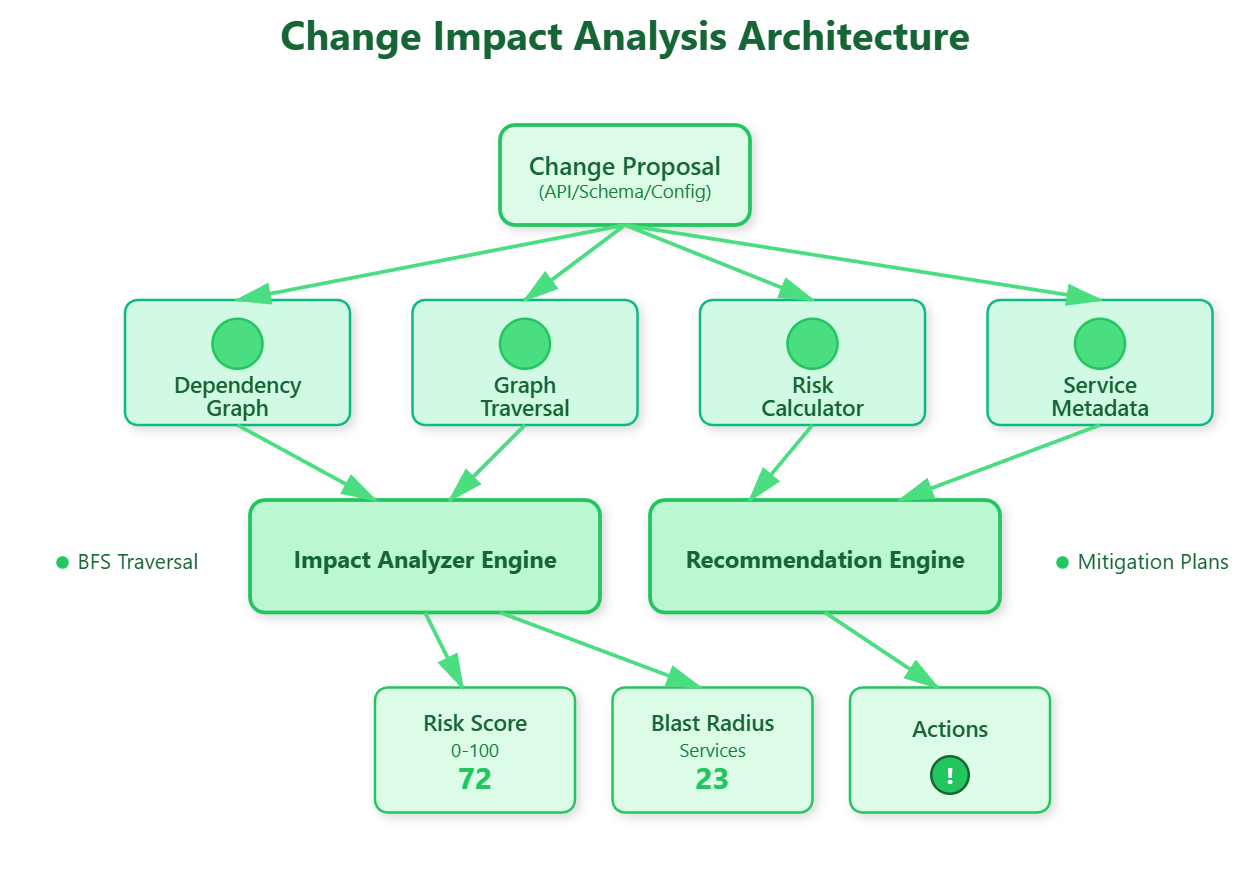
Today’s Mission: Create a system that analyzes proposed changes and predicts their blast radius across your distributed infrastructure. By lesson’s end, you’ll have a working impact analyzer that calculates risk scores, identifies affected services, and recommends mitigation strategies.
Key Components:
Change analyzer that evaluates modification proposals
Graph traversal engine for dependency impact calculation
Risk scoring algorithm based on service criticality
Visualization dashboard showing blast radius
Mitigation recommendation engine
The $3 Billion Lesson
In 2019, Stripe needed to deprecate their Charges API in favor of Payment Intents. A naive approach would have broken thousands of merchant integrations overnight. Instead, they built sophisticated impact analysis showing exactly which merchants used deprecated endpoints, their transaction volumes, and migration complexity. This allowed phased rollouts targeting low-risk integrations first, preventing revenue disruption.
Similarly, when Twitter deprecated v1.1 API endpoints, their impact analysis revealed 340,000 apps still using old authentication. Without this visibility, they would have created chaos for millions of developers. Impact analysis isn’t just technical—it’s about understanding business consequences.
Preparing for a distributed systems interview?
